













Bushing E60



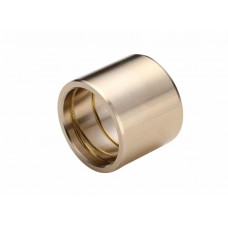

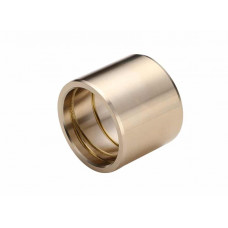
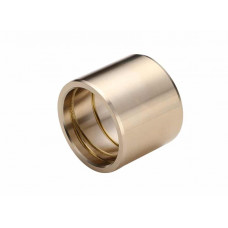
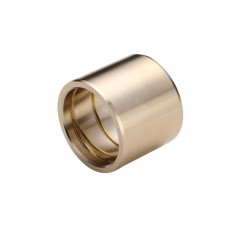
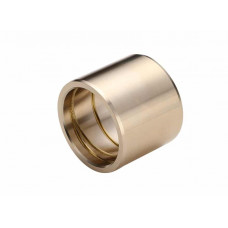
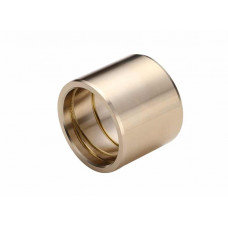
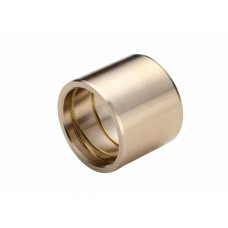
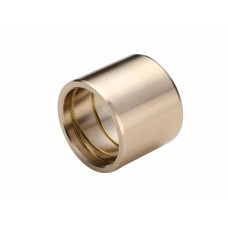
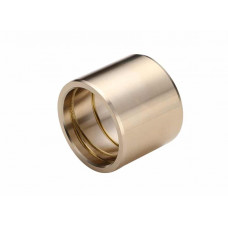
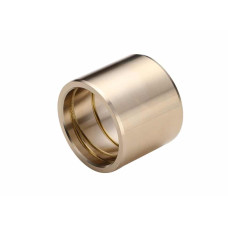
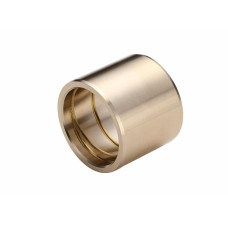
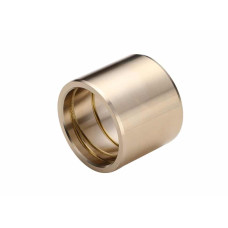
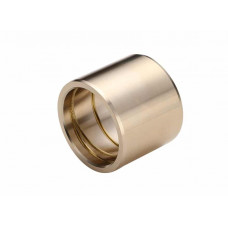
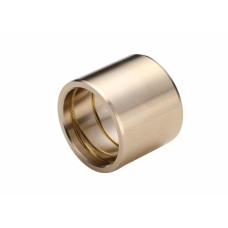
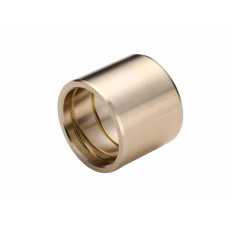
Not all joints have ample installation space, and E60 brass bushings are designed specifically for tighter spaces where the load remains significant.
The compact design of E60 brass bushings for confined spaces
E60 bushings have a compact profile, suitable for locations where there is no room for a standard-sized bushing or for flanged solutions. The brass used in their manufacture combines a relatively low weight with good sliding properties, making them useful in smaller joints that are under constant stress.
Mechanical strength of the alloys used in E60 bushings
The brass alloy used in the E60 offers solid mechanical strength for moderate to heavy loads, without the brittleness that a harder material would exhibit on impact. This combination of strength and slight flexibility reduces the risk of cracking under sudden loads, compared with some more brittle materials.
Integration of E60 bushings into standard industrial systems
Thanks to their compact dimensions, E60 bushings integrate easily into existing systems without requiring any modifications to the mounting housing. For related applications, XA bushings, E92 bushings and EB65.01 bushings can be used for the same repair, as can JDBF bushings for areas subject to axial loads.
Benefits of buying E60 bushings from the Hydraulic Seals Store
At Hydraulic Seals Store, E60 brass bushings are available in standard sizes, with full specifications displayed for each product. Up-to-date stock levels and fast delivery reduce repair times.
Although their compact dimensions limit them to moderate to heavy loads, E60 bushings remain a reliable solution where installation space does not allow for bulkier alternatives. The exact dimensions of each variant in the catalogue are displayed, and the support team can confirm compatibility based on the machine code if you need further verification before ordering.
Frequently Asked Questions
What loads can E60 brass bushings withstand?
They can handle moderate to heavy loads, making them suitable for compact joints in industrial machinery and equipment, but they are not designed for the heaviest impact loads.
How does the size of E60 bushings affect performance during operation?
A bushing that is too small or too large leads to excessive play or a forced fit, both of which affect the correct alignment of the shaft and accelerate wear on surrounding components.
Are E60 bushings suitable for impact loads?
Brass withstands moderate loads well, but for repeated and intense impact, variants such as bimetallic or hardened steel bushings offer greater long-term durability.
How should E60 bushings be fitted correctly?
The housing must be cleaned of any debris, and the bushing must be inserted straight, without applying lateral force, whilst ensuring the recommended clearance between the bushing and the shaft for the specific application.