













U-cup USH



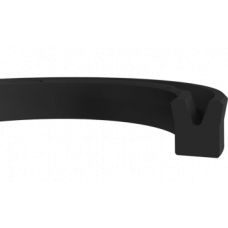

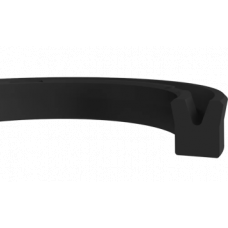
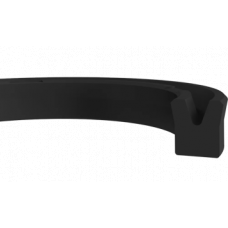
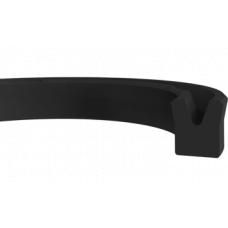
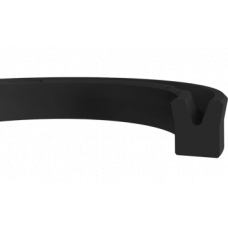
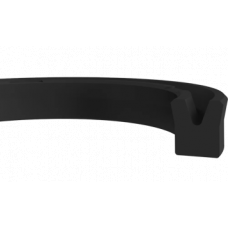
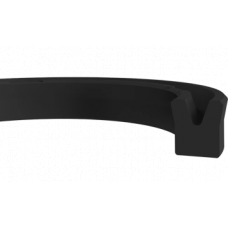
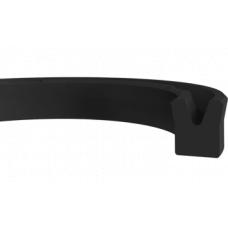
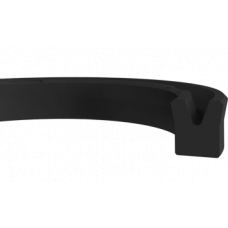
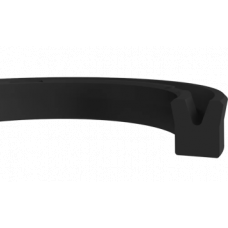
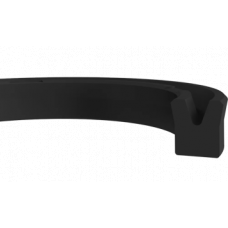
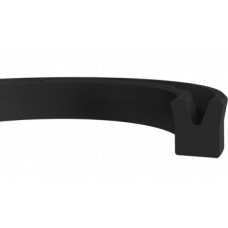
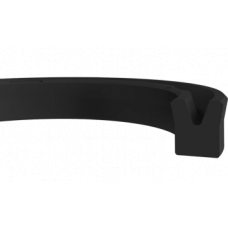
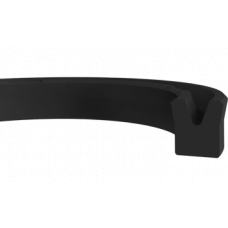
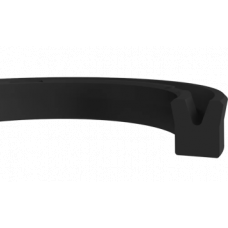
USH seals are polyurethane rod seals for hydraulic cylinders with medium and high pressures. Compared to UHS, the USH profile is also designed for reinforced versions with a backup ring, suitable when peak pressures frequently exceed 400 bar. They can be found in hydraulic presses, lifting systems with rapid cycles, drilling equipment, and automated production lines — applications where extrusion resistance is the main selection criterion. Complete codes, in standard and reinforced versions, with compatibility tables, are available on the hydsealstore shop, grouped by rod diameter.
Technical Characteristics of Polyurethane USH Seals
They operate between -30°C and +110°C, up to 400 bar in the standard version and 500 bar in the reinforced version. The abrasive wear resistance of high-density polyurethane is superior to NBR — the lip maintains proper contact with the rod after tens of thousands of cycles, and the geometry remains stable even at high temperatures during continuous operation. Compatible with HLP and HVLP mineral oils and some biodegradable fluids. For equipment operating at low temperatures below -25°C, check the technical data sheet — in cold conditions, polyurethane loses some of its flexibility. The remaining sealing components of the cylinder are covered by hydraulic seals, including guides and piston seals that work in tandem.
Hydraulic Performance and Behavior at High Pressures
USH is used in the cylinders of industrial presses, lifting systems with intensive cycles, drilling equipment, and in any cylinder with frequent reciprocating movement at high pressures. The reinforced version prevents material extrusion into the clearance between the rod and cylinder head — the most common failure of simple seals at extreme pressures, which manifests itself through progressive leakage and sudden failure within a few days. A rod wiper is mandatory together with USH — without it, service life decreases drastically, even on otherwise well-maintained equipment. Types suitable for high-pressure cylinders are available in the range of hydraulic wipers, including those with metal inserts for environments with mechanical impact.
Practical Guide to Selecting and Installing USH Seals
Identify the rod diameter, housing diameter, and groove depth. If peak pressures frequently exceed 350-400 bar, choose the reinforced version directly — the price difference is small compared to the cost of unplanned downtime. The groove must be completely clean, without traces of the old seal or hardened grease. The seal is inserted using a mandrel without sharp edges and lightly lubricated with oil from the system. At initial startup — perform a few slow cycles for proper seating, then gradually increase to the nominal pressure. Alternative profiles are available in the range of hydraulic seals, with options for non-standard dimensions and special fluids.
Advantages of Purchasing USH Seals
At Hydraulic Seals Store, you can find USH seals for cylinders operating under high-pressure conditions and for applications where extrusion resistance is important. Depending on the application, standard versions and reinforced solutions are available. For correct selection, not only the rod diameter matters, but also the groove dimensions and the pressure to which the cylinder is subjected.
In the case of pressures with frequent peaks, the seal version must be selected carefully and matched to the manufacturer's specifications. If you send us the groove dimensions and information about the operating conditions, we can help you identify the appropriate USH profile. The available products can be viewed in the Hydraulic Seals Store catalog.