






Bucket PIN: page 7

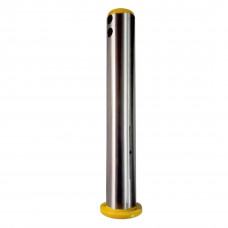

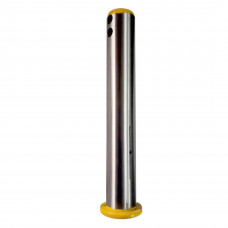
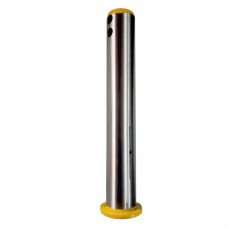
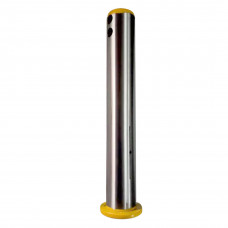
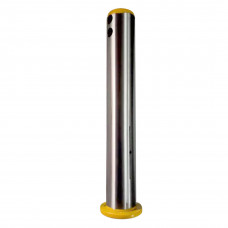
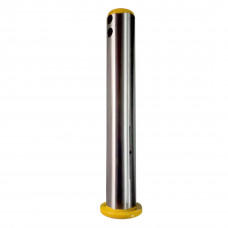
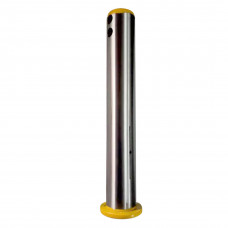
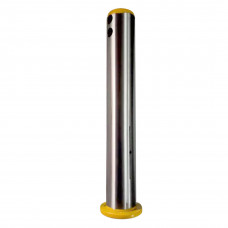
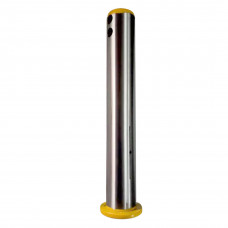
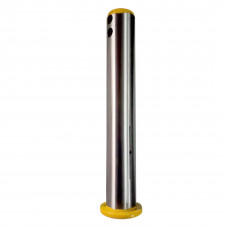
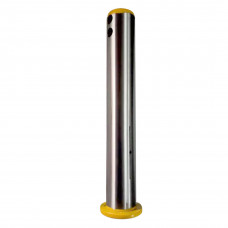
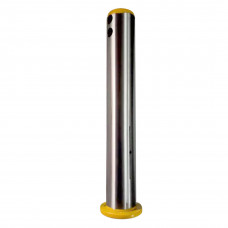
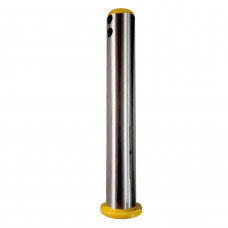
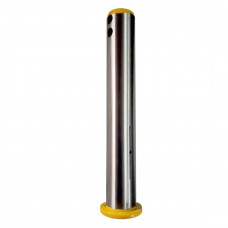
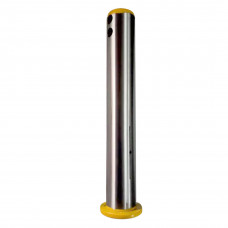
Pins connect the moving parts of a machine, and their condition directly affects the precision and service life of the entire joint.
What are pins, and where are they used?
A pin is a cylindrical steel rod, fitted within a joint to allow rotational or oscillating movement between two components, for example, between an excavator’s bucket and boom, or at the mounting points of a tractor. Together with the bushings surrounding it, the pin absorbs the mechanical loads transmitted through the joint and allows for the controlled movement of the connected components.
How to choose the right pin for the size and application
The diameter and length of the pin must correspond exactly to the housing in the joint and the bushings with which it will work — a difference of just a few millimeters can result in excessive play or a forced fit. The hardness of the material is just as important as the size: bolts marked 45HRC, for example, have undergone heat treatment that increases their resistance to wear and impact loads compared to an untreated steel bolt.
The role of pins in the fastening and operation of mechanical components
A worn or deformed bolt affects not only its own operation but also the condition of the surrounding bushings, as the resulting play accelerates the wear of both components. For this reason, the bolt and bushing are usually inspected and replaced together, not separately. For the corresponding bushings, the bushings category covers most compatible sizes, and to seal the joint area, oil seals and scrapers for bolts complete the repair. If the joint also requires a circular sealing ring, the O-ring category offers additional options.
The benefits of buying pins from the Hydraulic Seals Store
At Hydraulic Seals Store, bolts are listed with clearly specified dimensions and hardness for each product, so you can order the part that is compatible with your machinery directly. Up-to-date stock levels and fast delivery minimize downtime for construction or agricultural equipment.
To confirm compatibility before ordering, each product page displays the bolt’s diameter, total length, and hardness – sufficient information to avoid ordering the wrong part for machinery with similar dimensions.
Frequently Asked Questions
What are bolts used for?
Bolts connect the moving parts of a machine, allowing controlled rotational or oscillating movement at joints, for example, on excavator arms or buckets.
How do I choose the correct size for a pin?
Measure the diameter and length of the old bolt and check these against those of the bushings in the joint to avoid excessive play or a forced fit.
What does the 45HRC material specification mean for bolts?
It is an indication of the hardness achieved through heat treatment, which increases the bolt’s resistance to wear and impact loads compared to untreated steel.
When should a worn pin be replaced?
When there is visible play in the joint, noise during movement, or clear signs of wear on the pin’s surface, it is usually replaced together with the corresponding bushing.