













Seal TSE



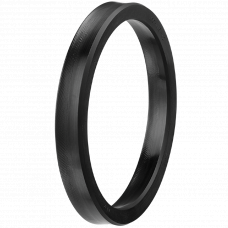

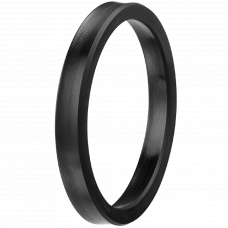
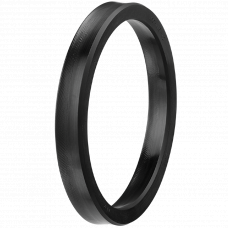
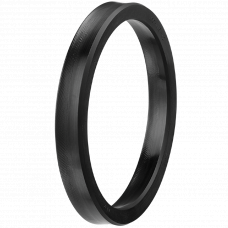
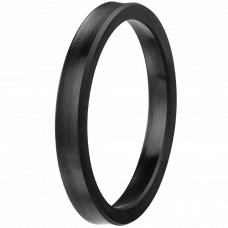
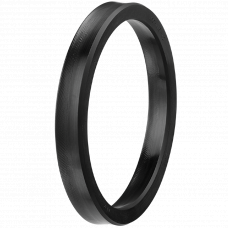
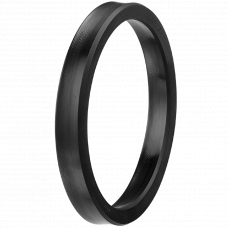
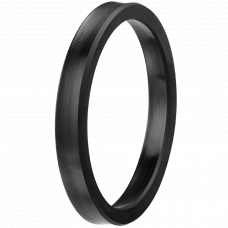
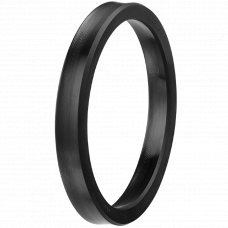
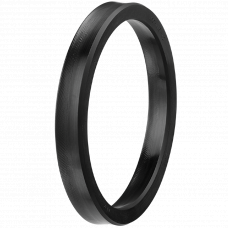
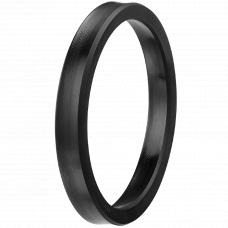
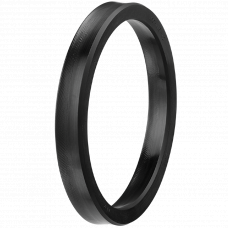
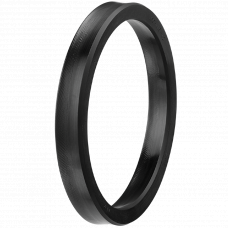
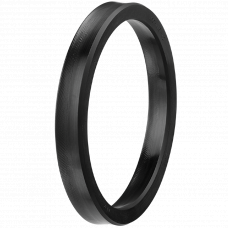
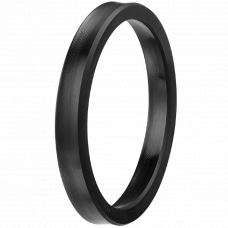
TSE seals are composite seals for rod sealing in cylinders operating at high and very high pressures. The construction combines a polyurethane or NBR body with a rigid backup ring — PTFE or synthetic material — that absorbs the load at pressure peaks and prevents the material from extruding into the clearance between the rod and cylinder head. Compared to simple seals, TSE seals last much longer when cyclic pressures are intense and frequent — the difference is clearly visible in systems operating above 350 bar continuously. The codes, dimensions, and body material variants are available on the hydsealstore shop, with recommendations for each pressure range.
Technical Profile and Areas of Application for TSE Seals
TSE seals withstand 350-500 bar in continuous operation. The backup ring absorbs the radial load at maximum pressure and protects the main lip from permanent deformation, while the main body provides the actual sealing. They operate between -20°C and +120°C and are compatible with HLP and HVLP. They do not show permanent deformation after repeated cycles at maximum pressure — a significant difference compared to simple seals, which fail progressively and begin to leak after several thousand intensive cycles. In cylinders with rapid pressure variations, TSE maintains proper sealing even after long periods of use. Complementary cylinder components are available in the range of hydraulic seals, with matching options for high-pressure systems.
Performance Under High-Pressure Conditions
TSE is used in industrial hydraulic presses operating at 300-500 bar, in cylinders of high-capacity cranes, in metallurgical equipment — rolling mills, forging presses — and in any cylinder with sudden and frequent pressure variations. Where simple seals fail prematurely due to extrusion, TSE withstands these conditions because the backup ring blocks exactly the critical area. The higher initial investment is quickly recovered through longer intervals between overhauls and reduced unplanned downtime. The rod wiper is essential at these high pressures as well — without it, contaminants quickly destroy the sealing lip. Versions compatible with pressures of 300-500 bar are available in the range of wipers, including those with metal inserts for harsh environments.
Selection and Online Ordering Guide for TSE Seals
Identify the rod diameter, housing diameter, and groove depth. Confirm that the operating pressure exceeds 300 bar or that there are frequent peaks above 350 bar — below these values, a simple seal may be sufficient and less expensive. If pressures regularly exceed 400 bar, choose the version with a more rigid backup ring. Installation follows the standard procedure — clean groove, no twisting of the lip, mandrel with rounded edges. The order in which the components are inserted matters, and the diagram in the technical data sheet must be followed. Profiles with lower pressure capacity are listed in the range of hydraulic seals, with simpler and more affordable versions for cylinders below 300 bar.
Advantages of Purchasing TSE Seals
For replacing the rod seal of a hydraulic cylinder, Hydraulic Seals Store offers TSE seals in versions suitable for the corresponding applications. Before ordering, it is important to check the rod diameter and the actual dimensions of the seal or housing. A small difference in size can lead to improper sealing and the occurrence of leaks.