













Types of Hydraulic Pumps and Their Role in Hydraulic Systems
- Hydraulic Seals Store Editorial Team
- October 10, 2026
- 54
- 0
- 0
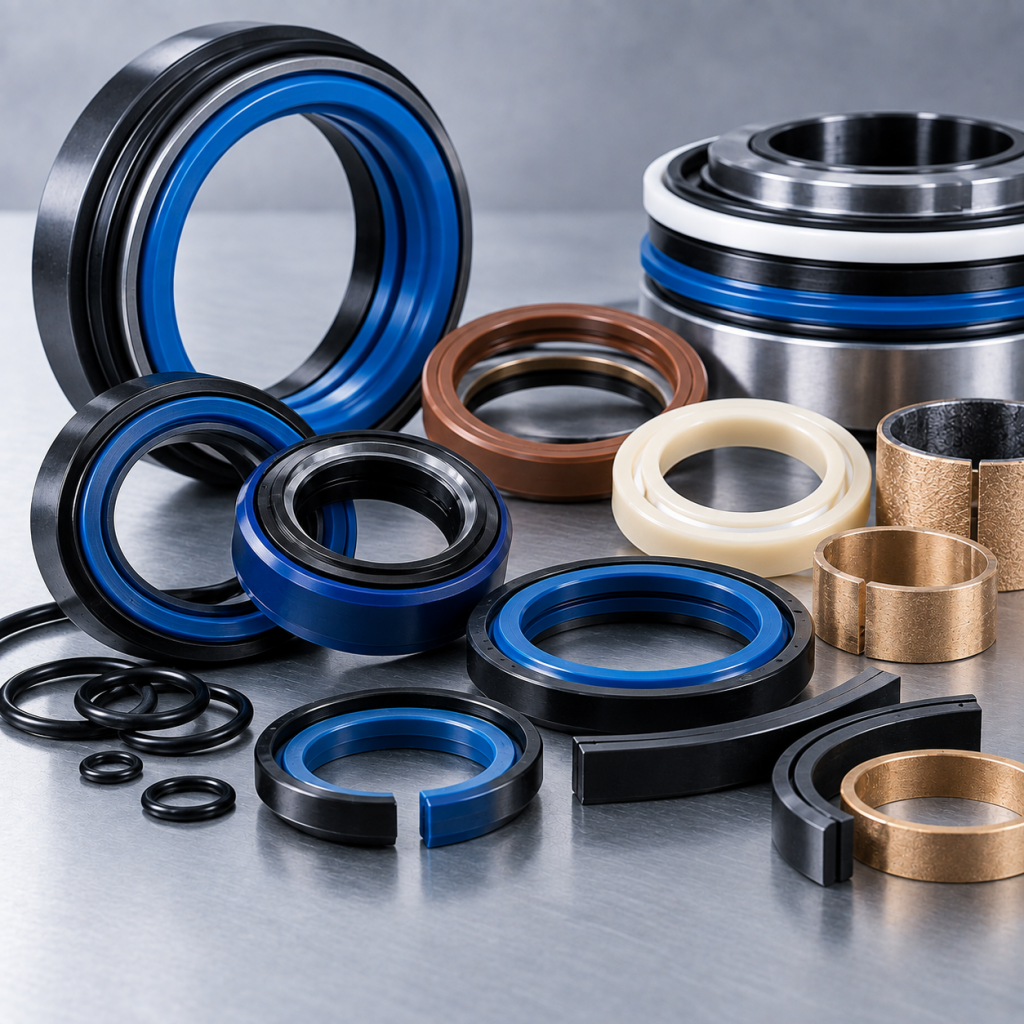
The hydraulic pump is the component that sets the entire system in motion — without it, no cylinder or hydraulic motor can operate. But understanding how it works and the differences between the main types matters in practice: the wrong type of pump for a given application may work initially, but it will cause problems sooner than it should — including with hydraulic seals and oil seals, the parts that fail first.
What is a hydraulic pump and how does it work
A hydraulic pump transforms the mechanical energy of an electric or combustion engine into hydraulic energy: flow and pressure. It creates a low-pressure area (suction) through which the fluid is drawn from the reservoir, and a high-pressure area (discharge) through which the fluid is pushed into the hydraulic circuit toward the actuators. One important thing to understand: the pump generates flow, not pressure. Pressure appears as a result of the resistance to flow in the circuit relative to the flow generated by the pump. A pump operating without a hydraulic load at the outlet does not generate significant pressure. One with the outlet completely blocked generates maximum pressure — limited by the safety valve — and can damage the system if the valve is missing or incorrectly adjusted.
The role of hydraulic pumps in industrial systems
The pump provides the continuous flow required to operate all actuators — cylinders, hydraulic motors, proportional valves — at the working pressure required for the desired force or torque. The reliability of the pump is directly reflected in the reliability of the entire system: a worn pump with large internal clearances generates lower flow than nominal, unstable pressure and overheating of the fluid. At every scheduled overhaul, static pump seals and pump seals are the first components to inspect.
Main types of hydraulic pumps
Gear pumps are the simplest and most robust type: two meshing gears create alternating suction and discharge volumes. Inexpensive, reliable, easy to maintain, suitable for medium pressures up to 200-250 bar. Fixed flow at a given speed. They tolerate fluid contamination well compared with piston pumps — an advantage when filtration is not perfect. Vane pumps have a rotor with retractable vanes that slide in the rotor slots, maintaining contact with the inner surface of the stator. More uniform flow compared with gears (less noise), quieter, suitable when noise level matters. More sensitive to fluid contamination. Axial or radial piston pumps are the highest-performance type: pressures up to 400-700 bar with efficiencies of 90-95%. Variable displacement axial piston pumps allow continuous adjustment of the flow from zero to maximum by changing the angle of the swash plate, regardless of motor speed — ideal for systems with variable flow and pressure requirements. They require clean and well-filtered hydraulic fluid.
Advantages and particularities of each type of pump
Gear pumps: simple, inexpensive, tolerant of contamination, easy maintenance. Suitable for applications with pressures up to 200 bar where fixed flow is acceptable. Vane pumps: quiet, uniform flow — suitable in the food industry or workspaces with operators, where noise level matters. More demanding in terms of filtration quality. Variable displacement axial piston pumps: the most energy-efficient, especially in systems with variable flow requirements — when the flow can be reduced when maximum force is not required, energy consumption decreases compared with fixed-flow pumps that recirculate the excess through the safety valve and convert it into heat. Highest purchase cost, require clean fluid.
How to choose the right hydraulic pump
The correct choice is made based on several key parameters: required flow (liters/minute), maximum working pressure (bar), type of drive (electric motor at fixed or variable speed, combustion engine with power take-off), requirements regarding flow uniformity and acceptable noise level, and availability of spare parts for periodic maintenance — a practical aspect that matters more than it seems, especially for seals and oil seals for hydraulic pumps, which differ significantly between types.
Frequently Asked Questions
What is a hydraulic pump and what is its role in a hydraulic system?
The hydraulic pump transforms mechanical energy into hydraulic energy, generating the fluid flow at the pressure required to operate all the actuators in the system. Without a pump, no cylinder or hydraulic motor can operate.
What are the main types of hydraulic pumps used in hydraulic systems?
Gear pumps (simple, robust, medium pressures), vane pumps (uniform flow, quiet) and axial or radial piston pumps (high pressures, maximum efficiency, variable flow possible with variable displacement versions).
What advantages do the different types of hydraulic pumps offer depending on the application?
Gear pumps: inexpensive and tolerant of contamination, ideal for simple applications. Vane pumps: quiet and uniform, good for the food industry. Piston pumps: the most energy-efficient, suitable for high pressures and variable flows in heavy industry.